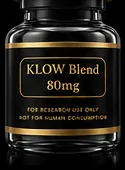
KLOW
80mg Total — KPV 10mg · GHK-Cu 50mg · BPC-157 10mg · TB-500 10mg
Four-peptide advanced repair and regeneration blend. KPV (tripeptide anti-inflammatory), GHK-Cu (copper peptide), BPC-157, and TB-500 combined in a single lyophilized vial. Studied for overlapping pathways in cellular repair, collagen synthesis, inflammatory modulation, and tissue remodeling research.
Certificate of Analysis
Every batch is independently HPLC-tested at an ISO-certified laboratory. Your COA — purity percentage, mass spec identity confirmation, batch traceability — is emailed automatically the moment your order is confirmed.
⚠ For Research Use Only. Not for human or veterinary consumption. Not for resale. By purchasing, you confirm this compound is intended solely for laboratory and research purposes and accept full responsibility for compliance with all applicable laws.
Research Context
KLOW is a four-peptide advanced formulation combining KPV (a tripeptide studied in anti-inflammatory pathway research), GHK-Cu (copper peptide studied for collagen synthesis modeling), BPC-157, and TB-500 — all in a single lyophilized vial for researchers studying overlapping pathways in cellular repair and tissue remodeling research models.
Why Researchers Choose Plato Peptides
Frequently Asked Questions
How should this compound be stored?
Lyophilized (freeze-dried) peptides should be stored at -20°C for long-term storage, or refrigerated at 2-8°C for short-term use within 2-4 weeks. Once reconstituted, compounds should be kept refrigerated and used within the stability window noted on the Certificate of Analysis. Always protect from light and avoid repeated freeze-thaw cycles.
What does the Certificate of Analysis include?
Every KLOW order includes a Certificate of Analysis with HPLC purity percentage, mass spectrometry confirmation of molecular identity, and full batch traceability. Your COA is emailed automatically at order confirmation — no request required.
What is the typical reconstitution process?
Lyophilized peptides are typically reconstituted using bacteriostatic water, added slowly down the side of the vial to avoid agitating the peptide structure. Reconstitution volume and technique vary by research protocol — see our Reconstitution Guide for detailed methodology.
Is KLOW third-party tested?
Yes. Every batch is independently verified at an ISO-certified laboratory using HPLC for purity analysis and mass spectrometry for identity confirmation. We do not rely on in-house-only testing claims.